
Introduction
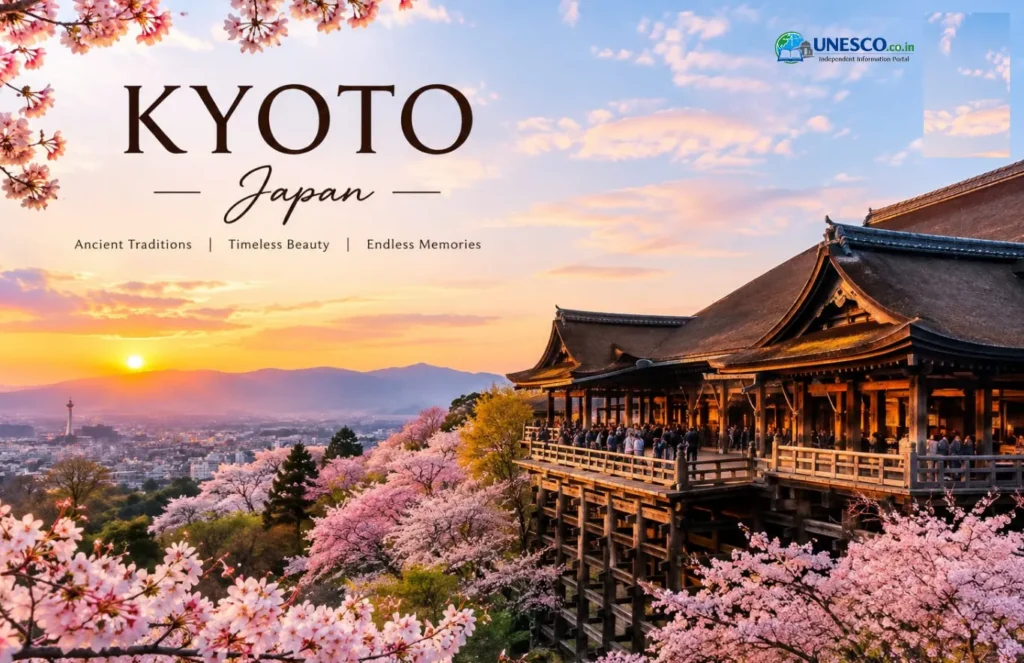
Kyoto is an ancient, beautiful, and culturally rich city in Japan. It served as the capital of Japan from 794 AD. A key feature of Kyoto is that its ancient heritage remains vibrant and alive to this day. The city is home to numerous ancient temples, Buddhist temples, Shinto shrines, palaces, traditional houses, and beautiful gardens. Although Kyoto is a modern city today, it has preserved its ancient heritage and traditions. Cherry blossoms in the spring and colorful foliage in the autumn enhance the city’s beauty.
Unesco World Heritage Site
The official name of the UNESCO World Heritage property associated with Kyoto is “Historic Monuments of Ancient Kyoto.” It was inscribed on the UNESCO World Heritage List in 1994. This World Heritage property comprises 17 historic sites located in the cities of Kyoto, Uji, and Otsu. These include significant sites such as Kiyomizu-dera, Kinkaku-ji (Golden Pavilion), Ryoan-ji, Ninna-ji, To-ji, Saiho-ji, and Nijo-jo Castle.
Famous Kyoto Sites
- Kiyomizu-dera
Kiyomizu-dera is one of the most famous Buddhist temples in Kyoto. Its history dates back to ancient times, and the temple is located on a hillside. Its traditional wooden architecture and the natural surroundings make it a special historical place.
- Kinkaku-ji
Kinkaku-ji is also known as the Golden Pavilion. The temple is famous for its beautiful golden exterior, peaceful pond, and traditional Japanese gardens. It is one of the most recognizable historical landmarks in Kyoto.
- Nijo Castle
Nijo Castle is an important historical site associated with Japan’s shogun era. It features palace buildings, beautiful gardens, and traditional Japanese architecture. The site helps visitors understand important aspects of Japan’s political and social history.
Also Read:https://unesco.co.in/the-hill-forts-of-rajasthan/
- Ryoan-ji
Ryoan-ji is a famous Zen Buddhist temple. It is particularly well known for its Rock Garden. The simple design of the garden reflects the peace, simplicity, and traditional values of Japanese Zen culture.
- Ninna-ji
Ninna-ji is an important ancient Buddhist temple in Kyoto. It features historic buildings, traditional gardens, and beautiful Japanese architecture. The temple is an important part of Kyoto’s cultural and religious heritage.
Best time to visit Kyoto
The periods from March to May and October to November are considered the best times to visit Kyoto.
March–April: A beautiful time to see the cherry blossoms. October–November: An excellent time to witness the colorful autumn scenery. The weather is generally pleasant for sightseeing during both these periods.
Also Read:/fatehpur-sikri-the-city-of-mughal-grandeur/
Natural Beauty
Kyoto is a beautiful Japanese city where historical heritage and natural beauty come together. The city is surrounded by lush green mountains, serene rivers, lovely lakes, traditional gardens, and a variety of trees. During spring, Kyoto’s streets, gardens, and riverbanks come alive with beautiful pink and white cherry blossoms. In autumn, the leaves turn shades of red, orange, and yellow, creating a truly enchanting cityscape. The face of nature in the city transforms with every season.
Thank you for visiting our website
Thank you for visiting our website and taking the time to explore the beauty, history, culture, and natural heritage of /Kyoto. We hope the information provided has helped you learn more about this wonderful destination.