
Introduction
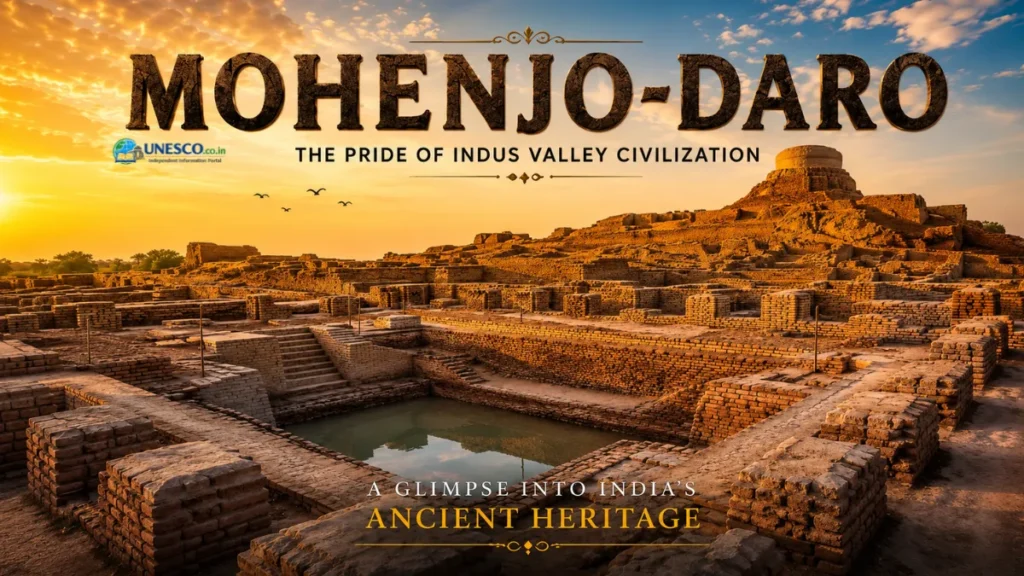
Mohenjo-daro is one of the most remarkable archaeological sites of the ancient world. It was built around 2500 BCE during the Indus Valley Civilization and is located in the Sindh province of present-day Pakistan. The city is known for its advanced town planning, well-constructed brick buildings, and one of the earliest drainage systems in history. It represents the intelligence, creativity, and engineering skills of an ancient civilization that flourished thousands of years ago.
Discovery of Mohenjo-daro
Mohenjo-daro was discovered in 1922 by archaeologist R. D. Banerji during archaeological excavations. This discovery became one of the greatest achievements in the study of ancient civilizations. Excavations uncovered houses, streets, public buildings, seals, tools, pottery, and many other artifacts that revealed the rich culture and advanced lifestyle of the people who once lived there.
Origin of the Name
The name “Mohenjo-daro” comes from the Sindhi language and means “Mound of the Dead.” This name was given by local people long before the site was scientifically explored. Although its original ancient name is still unknown, Mohenjo-daro has become one of the most recognized archaeological sites in the world.
Life in the Ancient City
The people of Mohenjo-daro enjoyed a well-organized urban lifestyle. Most houses were built with baked bricks and included private wells, bathrooms, and drainage connections. The residents were skilled farmers, merchants, craftsmen, and traders who exchanged goods with distant regions. Their daily life reflected a peaceful, organized, and prosperous society
Architecture and Town Planning
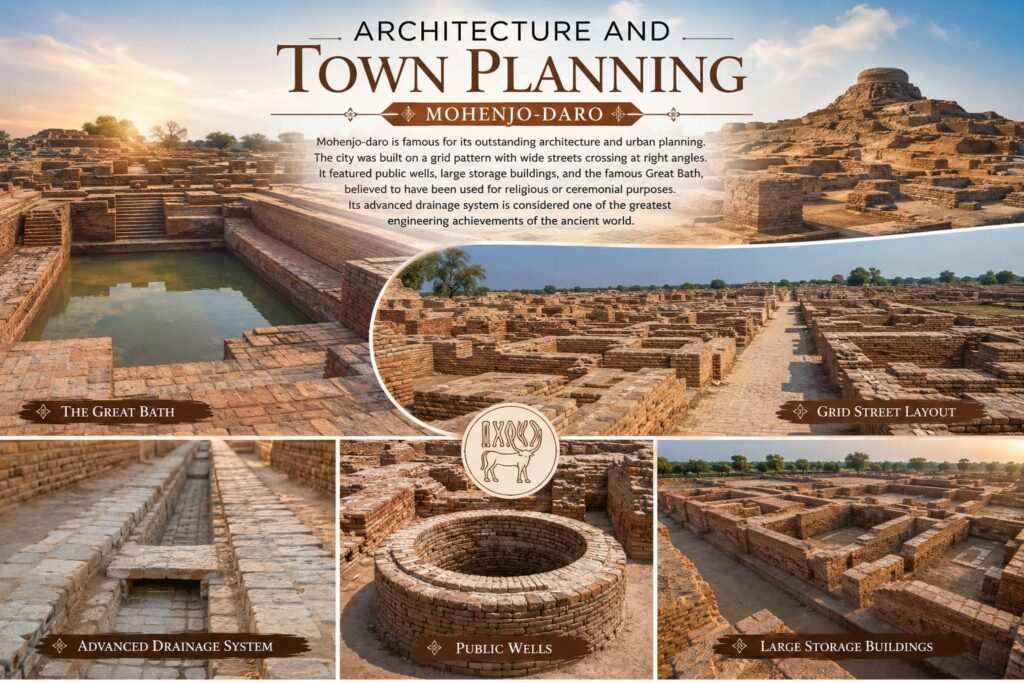
Mohenjo-daro is famous for its outstanding architecture and urban planning. The city was built on a grid pattern with wide streets crossing at right angles. It featured public wells, large storage buildings, and the famous Great Bath, believed to have been used for religious or ceremonial purposes. Its advanced drainage system is considered one of the greatest engineering achievements of the ancient world.
Decline of Mohenjo-daro
The exact reason for the decline of Mohenjo-daro remains a mystery. Historians believe that repeated flooding, climate change, changes in river courses, environmental factors, or economic decline may have caused people to gradually leave the city. Despite many theories, no single explanation has been confirmed.
Also read: Qutub Minar: A Timeless Symbol of India’s Rich Heritage
UNESCO World Heritage Site
In 1980, Mohenjo-daro was designated as a UNESCO World Heritage Site because of its outstanding historical, cultural, and archaeological significance. Today, it is protected as one of the world’s most valuable heritage sites and continues to provide important insights into the Indus Valley Civilization.
Conclusion
Mohenjo-daro is a timeless symbol of human achievement and one of the earliest examples of urban civilization. Its advanced planning, engineering, architecture, and cultural heritage continue to inspire historians, archaeologists, and visitors from around the world. Preserving this ancient city helps future generations understand the remarkable history of one of humanity’s oldest civilizations.
Also read: HAMPI-THE TIMELESS RUINS OF INDIA-Hampi – The lost city of the Vijaynagar Empire
Thank you for visiting My Website
Thank you for visiting our Mohenjo-daro website. We truly appreciate your time and interest in exploring one of the world’s oldest and most remarkable ancient civilizations.