
Introduction
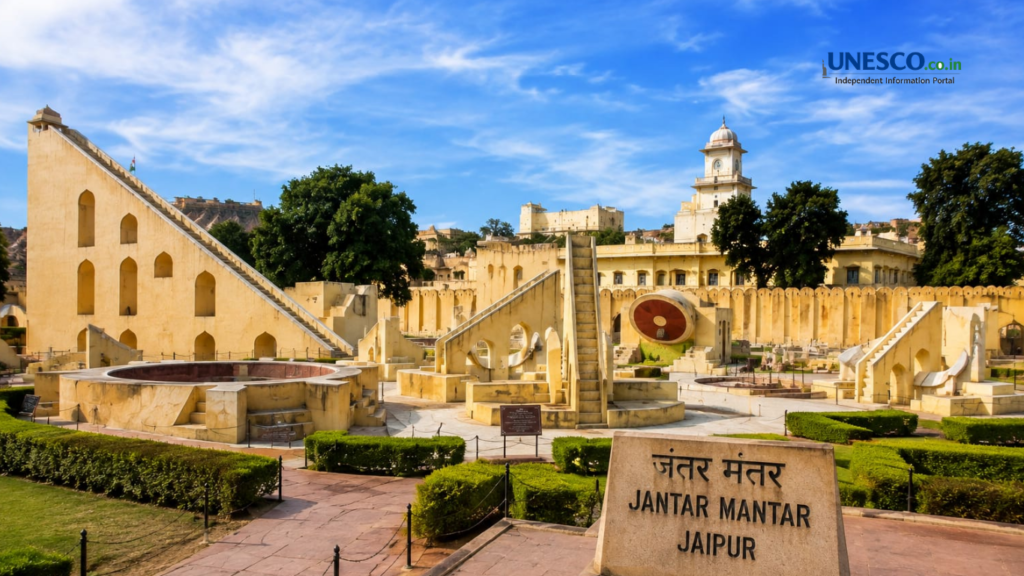
Jaipur’s Jantar Mantar is a marvel of ancient Indian science, astronomy, and extraordinary architecture. It is the world’s largest and most accurate astronomical observatory built of stone. It was declared a UNESCO World Heritage Site in 2010. It was constructed by Maharaja Sawai Jai Singh and its construction was completed in 1734.Jantar Mantar is not merely a Center of science but also a magnificent example of architecture.
Samrat Yantra
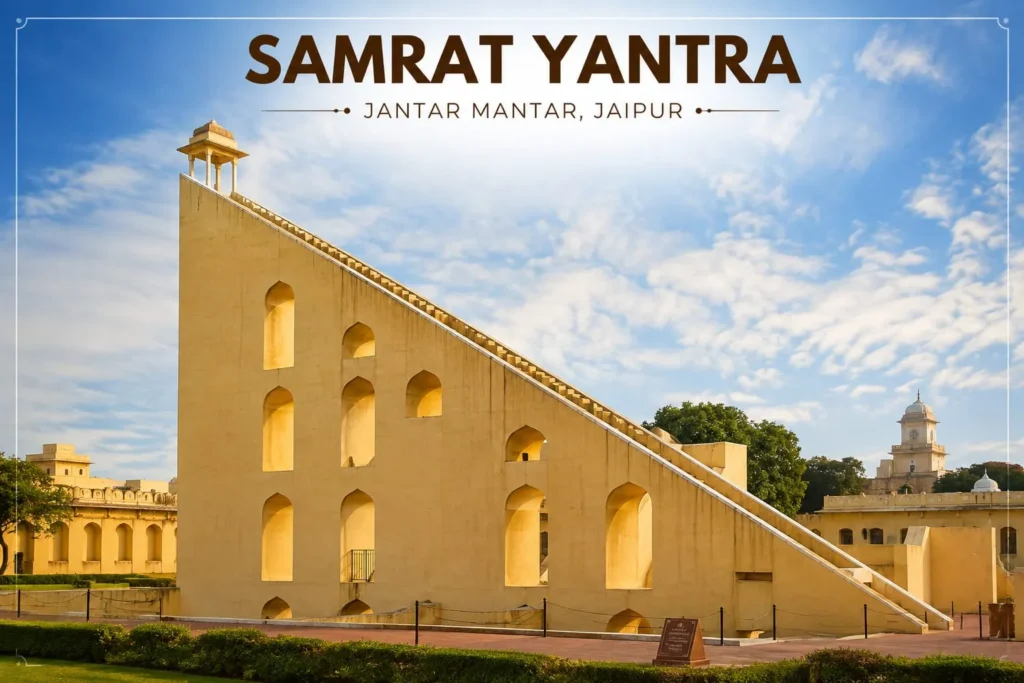
The Samrat Yantra was constructed in the 18th century by Maharaja Sawai Jai Singh II of Jaipur.The Samrat Yantra is the world’s largest stone sundial.This is the world’s largest stone sundial, used to determine accurate time.This is a large, triangular stone slope (resembling a large staircase). Two curved bands, marked with minute and hour numerals, are positioned around it. As the sun moves across the sky during the day, the shadow of this triangle falls onto the bands below. The numeral indicated by the shadow represents the current time.
Jay Prakash Yantra
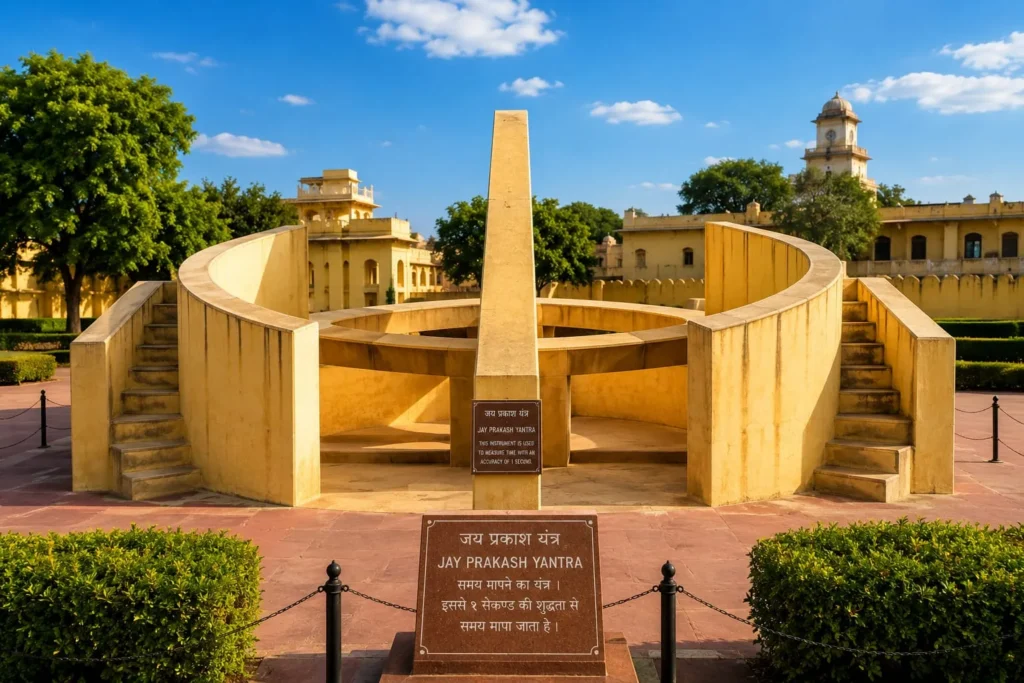
The Jay Prakash Yantra is an important astronomical instrument. It is used to measure the positions and movements of the Sun, stars, and planets. The instrument consists of large hemispherical structures with markings that represent the celestial coordinate system. This instrument consists of a pair of hemispherical bowls—positioned partly underground and partly above ground—that present an inverted reflection of the sky; it features graduated markings and cross-wires stretched across its rim.
Also Read:darjeeling-himalayan-railway-a-journey-through-the-clouds/
Ram Yantra
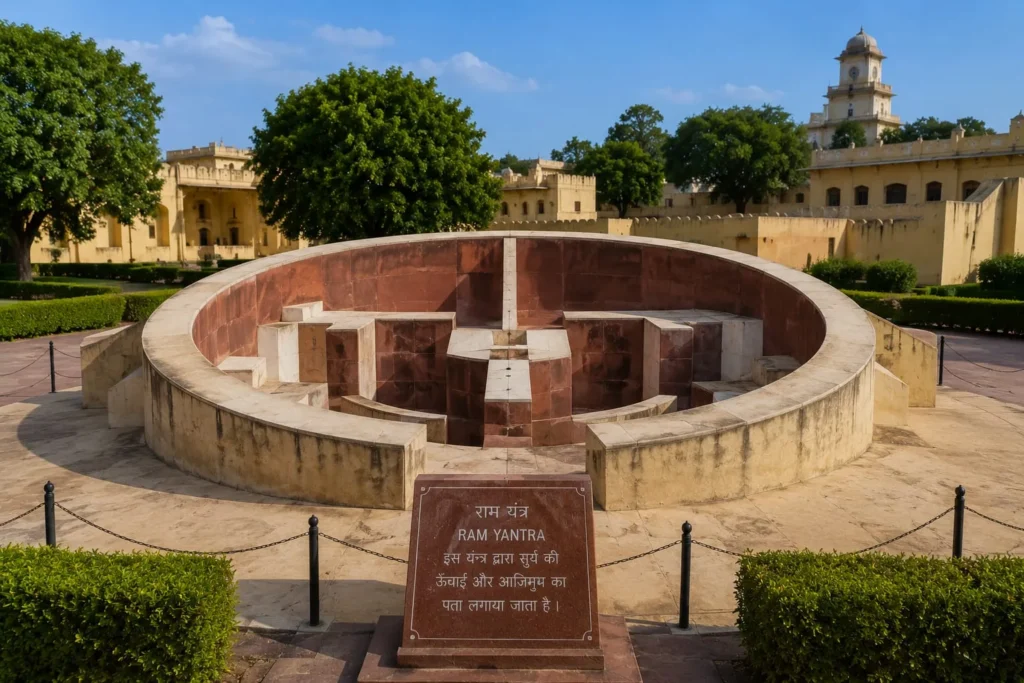
The Ram Yantra was constructed by Maharaja Sawai Jai Singh in 1734.This instrument is an important geometric and astronomical tool for measuring the altitude and direction of the sun.During the day, the precise positions of the planets and the time can be determined by observing where the shadow of the central pillar falls on the walls and the floor due to sunlight. At night, observations are made by aligning stars with the top of the pillar in a straight line.
Digash Yantra
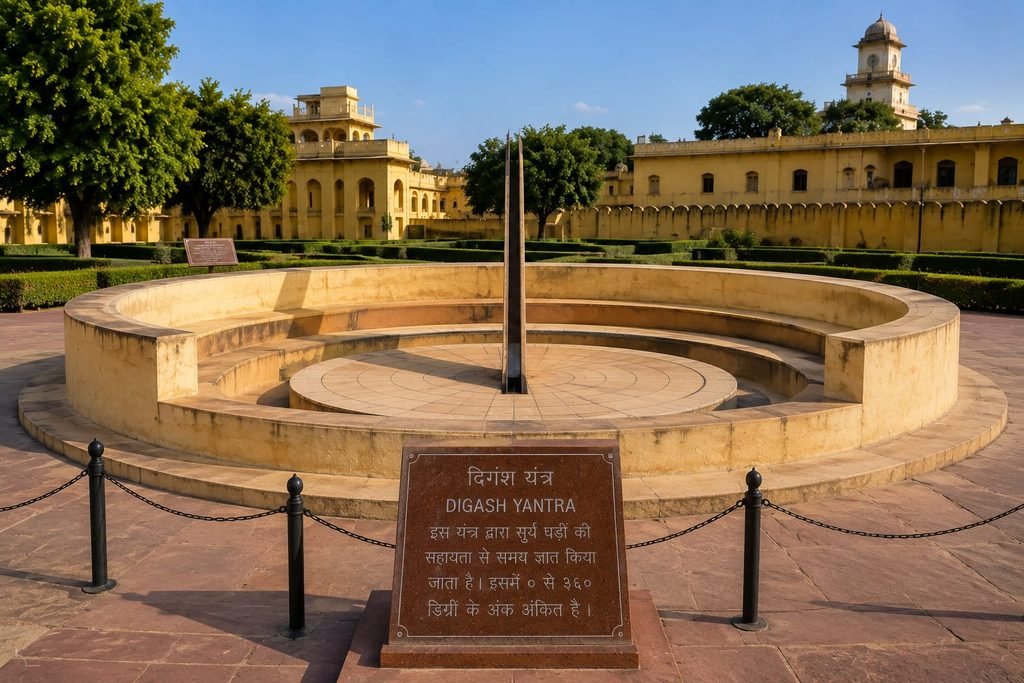
The Digash Yantra is a pillar-like device that helps determine the position of the Sun and the azimuth of celestial bodies in the sky.The word ‘Digansh’ signifies ‘direction’ and ‘degree’. This instrument was constructed between 1724.
Also Read:Rann Utsav Kutch – The Famous White Desert
Timing & Entry Fee
| Category Of Visitor | Price |
| Indian Adults | ₹ 50 person |
| Indian students | ₹ 15 per person (ID Card Required) |
| Foreign Adults | ₹ 200 Per Person |
| Foreign Students | ₹ 100 Per Person (ID Card Required) |
Best Time To Visit
The Best Time To Visit Jantar Mantar Is October to March. when the weather is pleasant and comfortable for exploring the open-air observatory. Morning hours are especially enjoyable because the weather is fresh and the sunlight helps visitors understand how the instruments work
Thank You For Visiting Website
Thank You For Visiting Website I Hope You Enjoyed Reading About Jantar Mantar