

Introduction To Ahmedabad
Ahmedabad is the largest city in Gujarat and one of India’s most important cultural and historical destinations. Founded in 1411 by Sultan Ahmed Shah, the city is known for its rich heritage, beautiful architecture, vibrant markets, and diverse traditions. It perfectly blends centuries-old history with modern urban life. The city is famous for its beautifully preserved heritage pols, magnificent mosques, temples, traditional wooden houses, bustling markets, and vibrant festivals. In 2017, Ahmedabad made history by becoming the first city in India to receive UNESCO World Heritage City status.
HISTORY OF AHMEDABAD
The city was established by Sultan Ahmed Shah on the banks of the Sabarmati River. Over the centuries, Ahmedabad became an important center for trade, culture, and craftsmanship. Today, its historical buildings and traditional neighborhoods continue to tell the story of its remarkable past.
The Vision of Sultan Ahmed Shah

Sultan Ahmed Shah founded Ahmedabad with the vision of creating a prosperous and well-planned city. Under his rule, magnificent forts, mosques, and public spaces were built, many of which still stand today symbols of the city’s glorious heritage.
The Famous Heritage Pols Of Ahmedabad
The heritage pols are traditional residential neighborhoods famous for their closely built houses, carved wooden balconies, and strong sense of community. They represent a lifestyle that has been preserved for generations.
Jama Masjid-A Masterpiece of Indo-Islamic Architecture
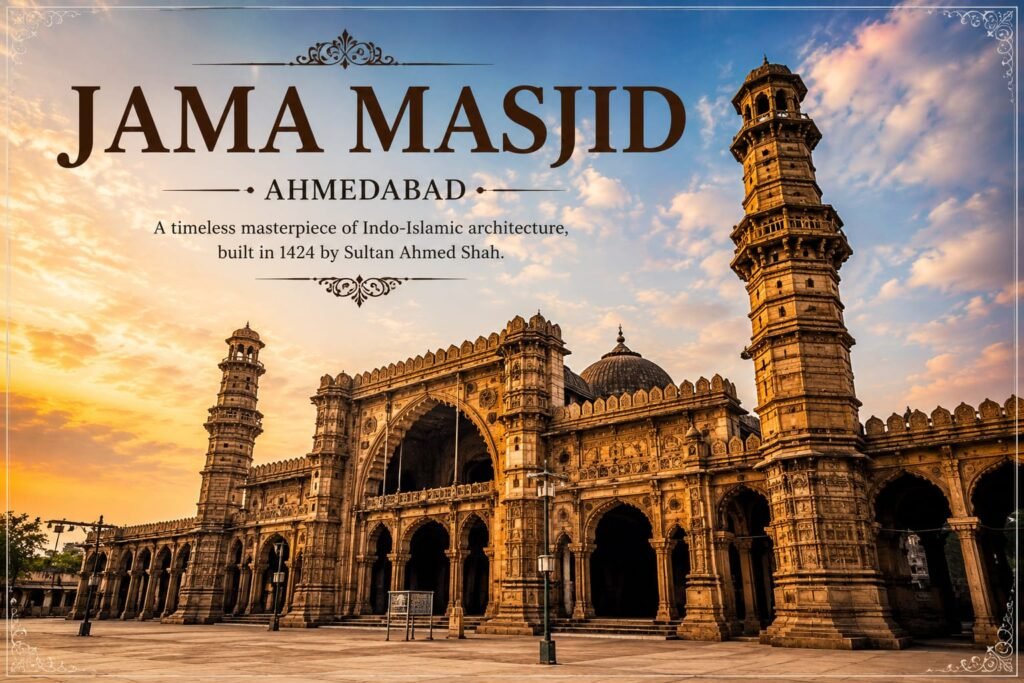
Jama Masjid is one of the most magnificent historical monuments in Ahmedabad and an outstanding example of Indo-Islamic architecture. Built in 1424 by Sultan Ahmed Shah I, the mosque served as the main congregational mosque of the city. It is located in the heart of the old walled city and is admired for its grand courtyard, elegant domes, beautifully carved stone pillars, and intricate architectural details.
Sidi Saiyyed Mosque and the Famous stone Jali
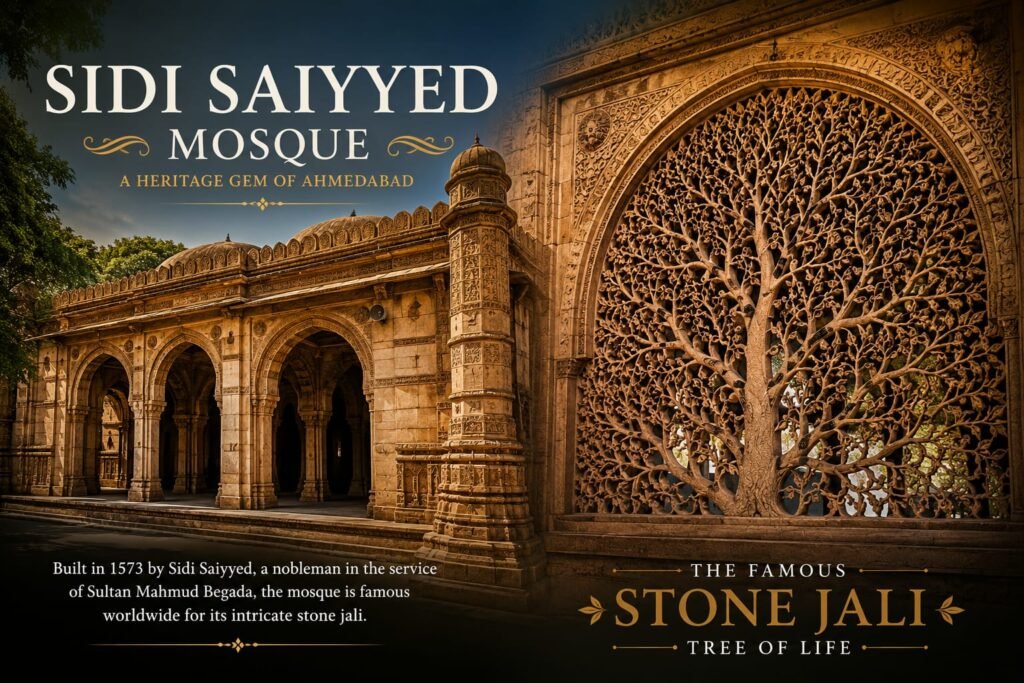
Sidi Saiyyed Mosque is one of Ahmedabad’s most iconic historical landmarks. It was built in 1573 by Sidi Saiyyed, an Abyssinian noble during the final years of the Gujarat Sultanate. The mosque is world-famous for its beautifully carved stone jali, especially the Tree of Life design, which is considered a masterpiece of stone craftsmanship. The intricate jali allows natural light to pass through while creating stunning artistic patterns. Today, it is one of the most recognized symbols of Ahmedabad and reflects the city’s rich architectural heritage. Visitors from around the world admire the mosque for its history, artistic beauty, and cultural significance.
Sabarmati Ashram – The Home Of Mahatma Gandhi
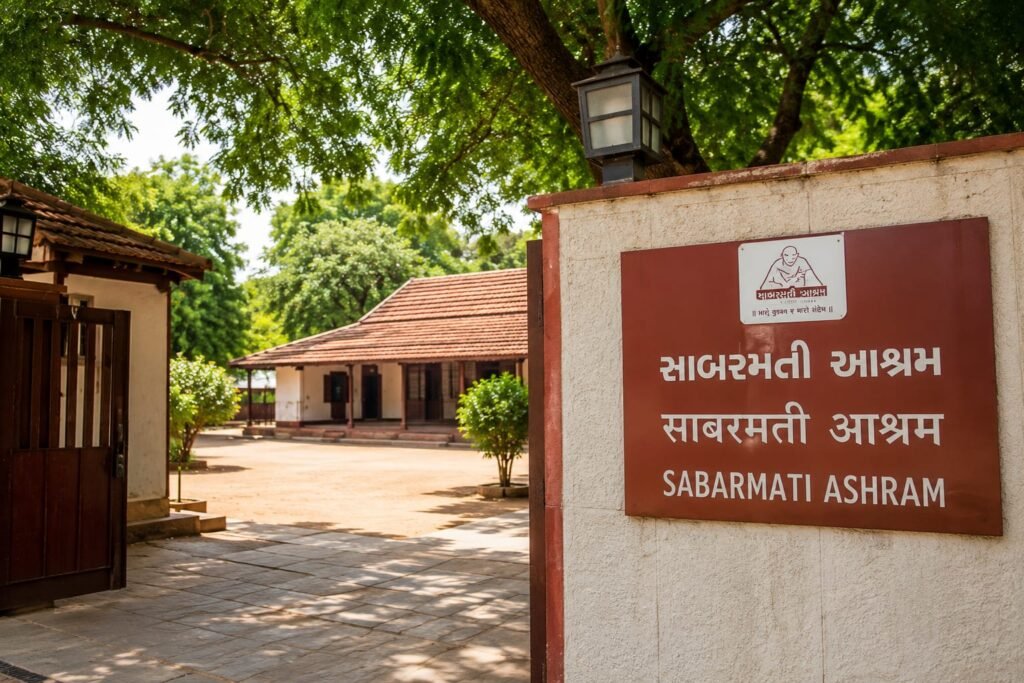
Sabarmati Ashram is one of the most important historical sites in Ahmedabad. It was established by Mahatma Gandhi in 1917 on the banks of the Sabarmati River. The ashram served as Gandhi’s residence and became the center of India’s freedom movement, where he promoted the principles of truth, non-violence, and self-reliance.
Tradition Food and Famous Street Food

Ahmedabad is famous for delicious Gujarati cuisine and lively street food. Popular dishes like Dhokla, Khaman, Pani puri Fafda, Jalebi, Thepla and khandvi are enjoyed by both locals and visitors.
Also read: HAMPI-THE TIMELESS RUINS OF INDIA-Hampi – The lost city of the Vijaynagar Empire
Conclusion
Ahmedabad is a city where history, culture, and modern life exist together beautifully. Its UNESCO World Heritage status reflects its global importance, making it a destination that deserves to be explored and appreciated by visitors from around the world.
Thank You For Visiting My Website
Thank You for taking the time to explore the Historic city of Ahmedabad through our website.